Who are the people powering Australia?
Twenty locations per season, one airstrip at a time. Weekly from 2027.
The series
Australia is mostly a very long way from anywhere
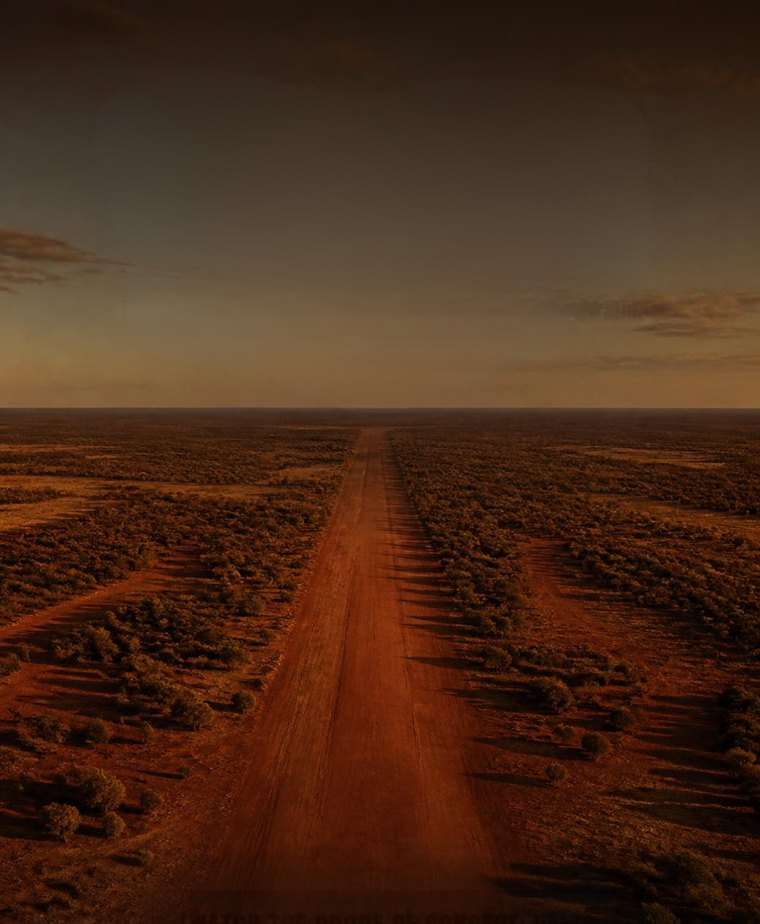
From the air you see it properly: an hour of nothing, then a strip, a shed, a set of lights, and someone working. Then another hour of nothing.
Every one of those lights is somebody who chose to be there. Some for the isolation. Some because their family has worked that country for four generations. Some because they saw an opening and gave it a crack. What does it take to make a living out there, and what keeps them going?
The Outback Aviators are a group of pilots and film makers, flying across that vastness and landing on whatever is there, dirt, grass or bitumen. We spend a couple of days in each place helping out the people who do it every day. Harvest. Hauling net at four in the morning. Heading underground with opal miners, or mending fence.
What we are after is the raw, gritty work of providing for Australia, and the people who power it.
The work
Finding out what it takes to get the job done
Not an interview and not a visit. Two full days on the ground, start to finish, at the speed the work actually happens. Mustering, drafting, shearing, running a bore, hauling net at four in the morning, fixing whatever broke overnight.
Staying that long is the whole method. An hour gets you the version people tell visitors. By the second afternoon they have stopped performing, and the real conversation happens sideways while their hands are busy and we are standing close enough to be useful.
We pitch in where we can be useful and stay out of the way where we cannot. Tickets, licences and plain competence rule out plenty, and we would rather film a job properly from a metre away than get in the road of people trying to finish it. When there is a gate to shut or a bale to shift, we shut it and shift it.
Two full days in every place, on their schedule rather than ours.
The leg in
The planning, the weather, the fuel and the strip. The distance is real because you watch it happen rather than hear about it.
The job
Two days alongside the people who do it every day, from the four o’clock start to whenever it finishes, until the work has a beginning and an end.
The leg on
What the place looked like after all that, and the flight to whatever comes next.
“An interview gets you answers. Time in the trenches gets you the person.”
Where we are headed
Season one, in planning
Queensland first. Twenty locations across five adventures, and the kind of work that keeps a long way from anywhere running. Six of them here, to give you the idea.
Block three / Manufacturing / Bundaberg, Queensland
The Build
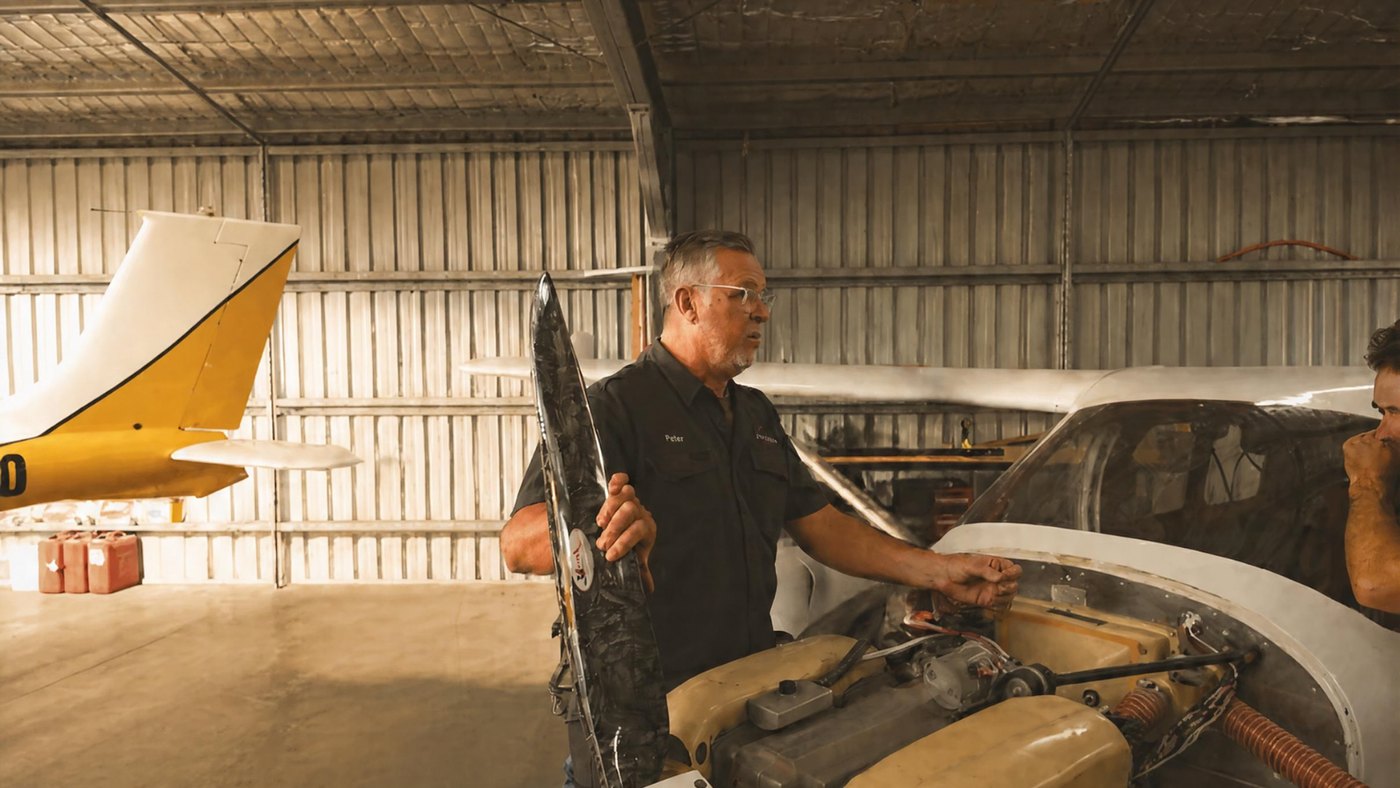
Jabiru Aircraft is one of a handful of companies anywhere that builds both the airframe and the engine, and it does it in a shed in a Queensland coastal town. Composite layup, machining, assembly, and a test flight off the strip next door.
Two days on the floor, making the parts that become the aeroplane the rest of the series is flying.
“Everything that flies out of here started as a roll of cloth and a drum of resin.”
Block one / Agriculture / Roma, southwest Queensland
Sale Day
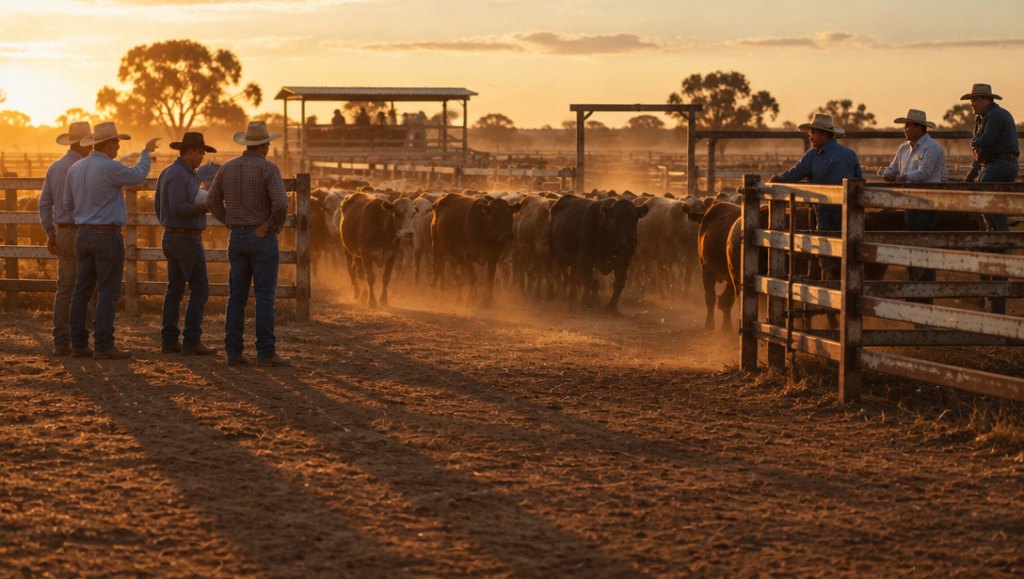
The largest cattle selling centre in the southern hemisphere. Thousands of head through the rail in a morning, sold in a language most Australians cannot follow at a speed they certainly cannot. Around it, coal seam gas wells going in on the grazing country that feeds the yards.
Two days: a sale day at the yards from the four o’clock start, and a muster on a property that supplies them.
“You get about four seconds to decide what an animal is worth.”
Block two / Resources / Boulder opal country, Quilpie
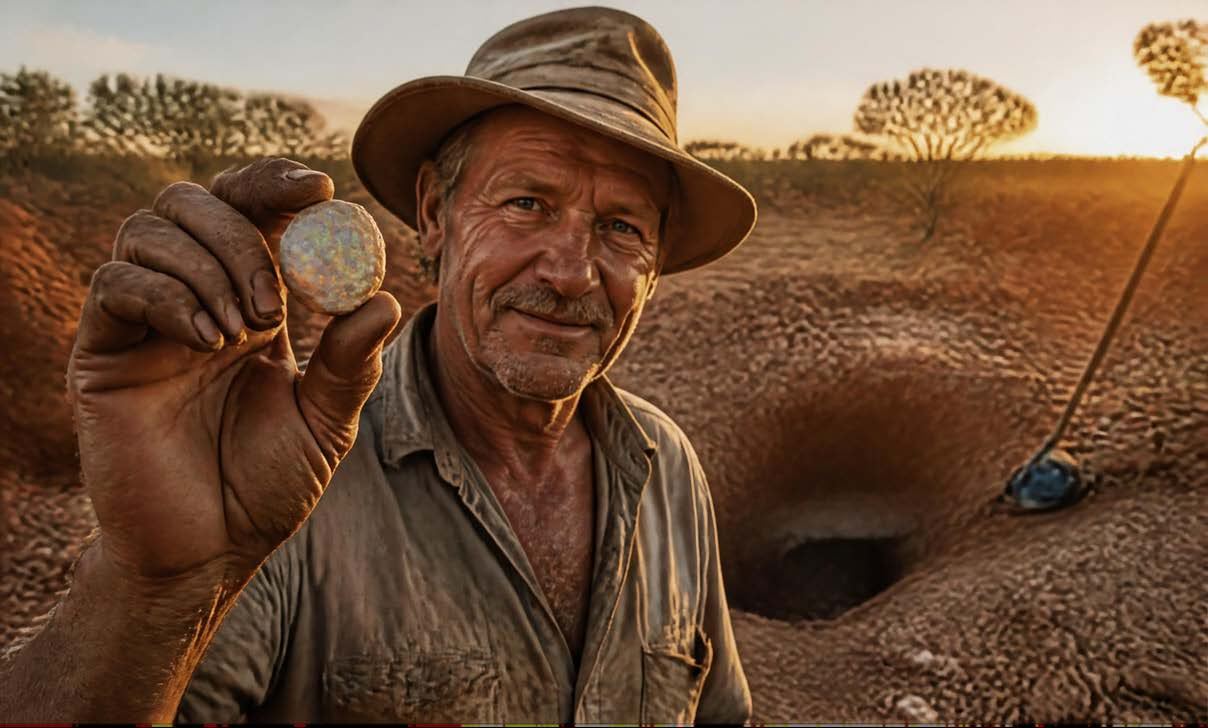
The Dig
A claim is a few hundred metres of dirt and a theory. The work is machinery, dust and repetition, and it pays nothing at all until the day it pays.
Two days on the claim: moving overburden, cutting, washing, and looking at rock that is almost always just rock. The people who do this have usually done it for decades and can tell you exactly why this seam, this depth, this direction.
“You can be wrong for three years and right on a Tuesday.”
Block three / Aviation / Longreach, central west Queensland
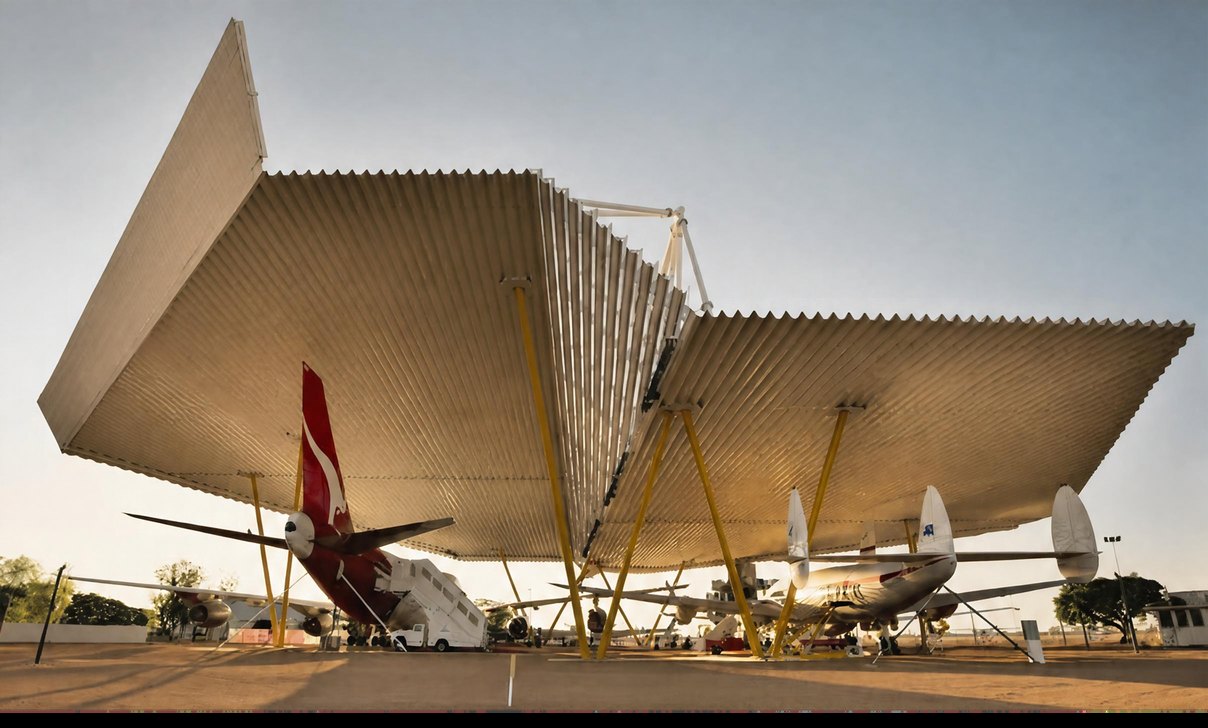
The Hangar
Qantas was a shed and two aeroplanes here before it was an airline, and the hangar is still standing. Around it is some of the best sheep and cattle country in the state, and a town that has spent a century working out what to do when the wool price moves.
Two days: in the hangar, on a station, and in the yards. The reason an airline started in a place like this is the same reason we are flying to it.
“There were no roads worth the name. That is why it had to be an aeroplane.”
Block four / Marine / Mackay, Queensland
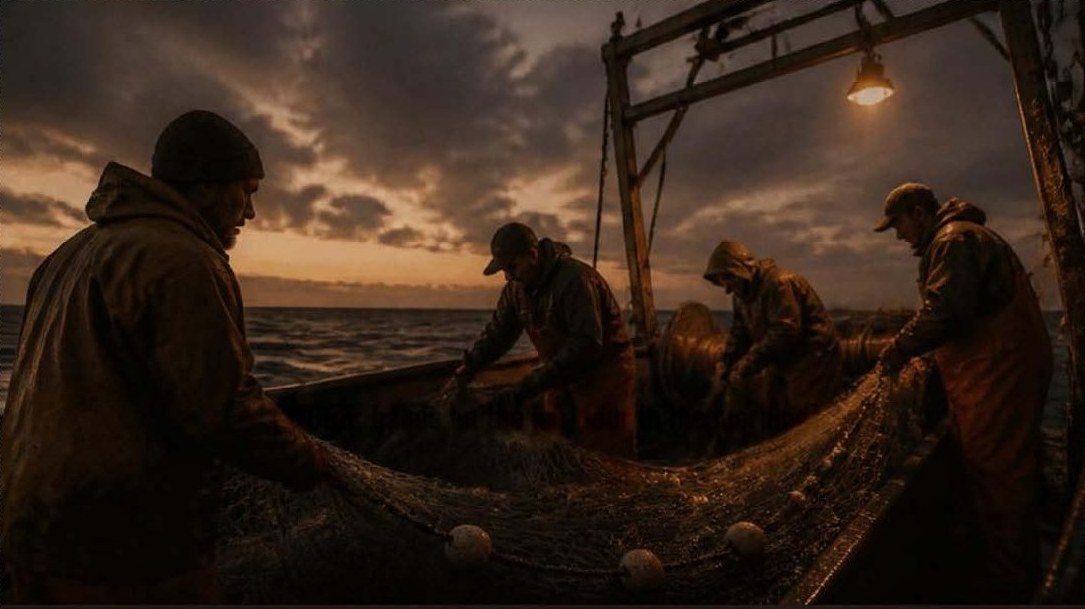
Marine Services
Four in the morning on the wharf, fuelling boats that are about to go a long way out with no second chance at it. Trawlers, reef tenders, the vessels that service the anchorage.
Two days on the water and on the hardstand: the pre-dawn turnaround, the run out, and what happens to every schedule on the coast when the weather closes in and nothing moves.
“The water is a dangerous place, and they still go in knowing what is under them.”
Block five / Aviation / Burketown, Gulf of Carpentaria
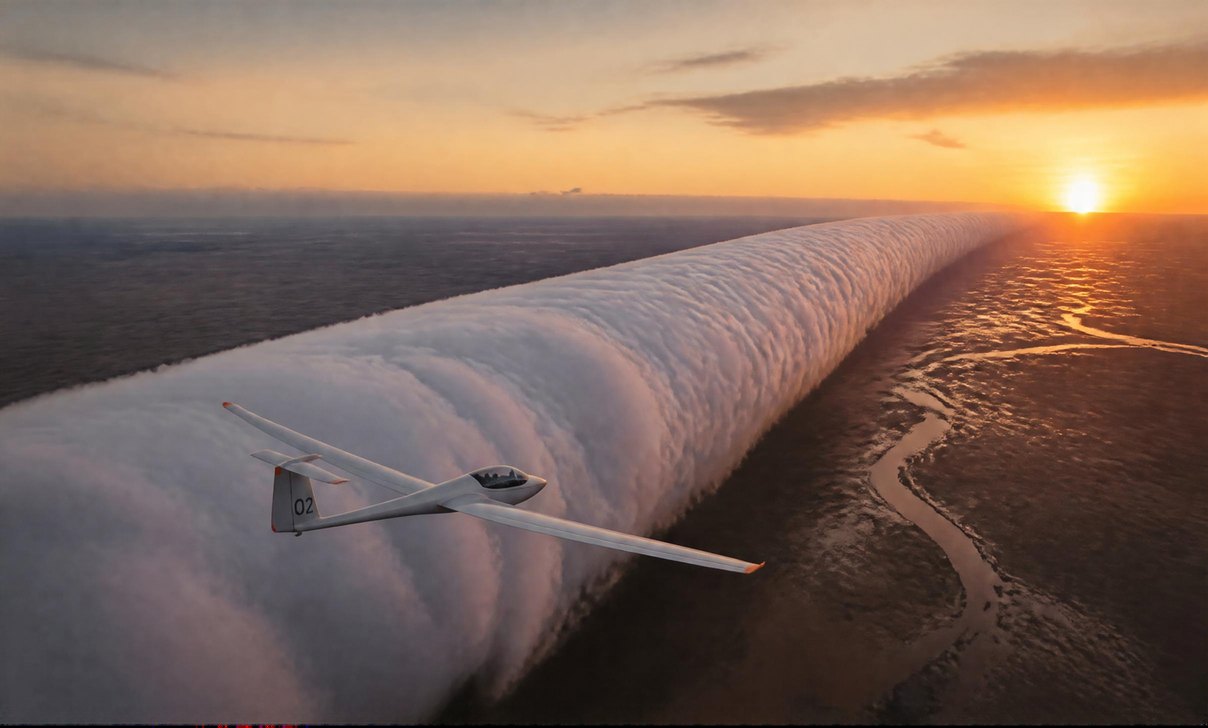
The Cloud
Once a year, around the end of the dry, a roll cloud a thousand kilometres long comes in across the Gulf at dawn. Glider pilots fly in from everywhere to ride it. It is called the Morning Glory, and nobody can tell you which morning it will arrive.
The rest of the year this is a barramundi town at the end of a road that shuts for months. Two days: in the air if it comes, and on the water if it does not.
“You cannot book it. You can only be standing here when it happens.”
Season one is in production planning. These are the kinds of places and work we are building it around, and every location depends on the people who actually do the job saying yes.
The map
Five adventures, twenty locations
Each block is a self contained flying loop out of Bundaberg, set in one region and shot in one run. The aircraft comes home between each one, which is what keeps a weather delay costing days instead of a whole block. The five below are the Queensland blocks, mapped for season one. The same shape works anywhere the distances do.
Pick a block to trace its loop.
Why Australia, why fly
Most Australians cannot picture the outback
They can picture the reef, the islands and the rainforest, because those have been filmed for fifty years. Ask them to describe Winton, Birdsville or the Gulf and you get very little, because almost nobody has put it on a screen.
Queensland alone runs from the Gulf to the Granite Belt, and roughly half its people live outside the capital. Cotton, cane, grain, cattle, sheep, prawns, coal and opal inside a single border. A season crosses every industry in this series without ever leaving Queensland.
A light aircraft reaches those locations in hours instead of days, which is the only reason a small crew can get to twenty of them. It is also the first difficulty in every location. The weather, the surface, the fuel, the daylight. The flying is planned on camera and it is not made to look easy.
Watching it
A fixed slot, and we keep it
Episodes land online, free, on a day that does not move. The slot is a promise, and going dark once costs more than starting late.
A new episode, same day, same time. Every episode resolves on its own, so you can start anywhere in the series and not feel behind.
A vertical short cut from Thursday’s episode, for Shorts, Reels and TikTok. The quickest way to find a channel you have never heard of.
Who makes it
Light Studios
A Queensland film and production company that has spent a decade making factual series about flying and the people who do it. Outback Aviators is directed and shot by Stephen Limkin.
The Will to Fly
Thirty five years of Jabiru Aircraft, from two men in Bundaberg who wanted flying to cost less to one of the very few companies anywhere that builds both the airframe and the engine. Told by the people who lived it.
Touch the Sky
Eight women from different backgrounds learning to fly, featuring Catriona Rowntree. Financed by Screen Australia in association with Documentary Australia and Screen Territory. Winner, Online Series Production of the Year, Screen Producers Australia Awards 2024. Winner, Best Documentary, International Online Web Fest. Held in the National Film and Sound Archive.
The Aviator
Bob Tait OAM has put more pilots into Australian skies than almost anyone alive. The film follows him taking one last journey through the system he helped build, sitting for a Recreational Pilot Certificate himself.
Fading Sands
Climate change and the loss of land in the Solomon Islands, made with World Vision across three trips and seven communities. Broadcast on SBS and NITV. Winner, Prix Okeanos, 14th International Oceanian Documentary Film Festival, Tahiti.
Taking Flight
Twenty two episodes inside a Sunshine Coast flight school, following a film director who is frightened of flying and decides to get his licence anyway. Shot week by week from the seat, with the fear intact and the theory not yet learned.
Talk to us about sponsorship
Season one is in planning, which is the point at which a partner can still shape it. Where we go, which jobs we film and who we spend the two days with are all still open.
We are talking to industry bodies, aviation and equipment makers, and regional organisations. If your people, your country or your product is already out there doing this work, there is a version of this series that puts it on screen honestly.
Industry bodies
Agriculture, resources and marine. Your members are the people doing the work on camera, in their own words, in a series that treats the job as the story rather than the backdrop.
Aviation and equipment
Aircraft, avionics, fuel and gear, used a long way from support in the conditions they were built for. Shown working rather than demonstrated.
Regional organisations
Twenty named locations, each one arrived at in the season there is a reason to be there. Most of them have never been put on a screen.
What there is to talk about
- Presence across one block, or across the whole season
- Your people and your work filmed on location rather than staged
- Footage from the shoot for your own channels
- Advance notice of where and when each block shoots, so you can plan around it
- Equipment and supply in place of, or alongside, cash
Editorial stays with us. Where we go and what we film is our call, and that independence is most of what makes the series worth putting your name on.
Tell us who you are and what you would want out of it. We will come back with what is possible and what it costs.
Email us about sponsorshipQuestions
What is Outback Aviators?
A factual series that flies a light aircraft into remote Australia and spends two full days with the people whose work keeps those places running. Twenty locations a season across five self contained flying blocks out of Bundaberg in Queensland, publishing weekly from 2027.
Where is it filmed?
Season one maps five blocks across Queensland. The South covers Goondiwindi, Cunnamulla, Charleville and Roma. Channel Country covers Quilpie, Eromanga, Birdsville and Thargomindah. Central West covers Longreach, Winton, Bundaberg and Boulia. The North covers Mackay, Charters Towers, Hughenden and Julia Creek. The Gulf covers Karumba, Normanton, Burketown and Adels Grove.
When can I watch it?
Weekly from 2027, free and online, on a fixed day that does not move. A vertical short follows each Sunday, cut from that week’s episode.
What sort of work does the series film?
Mustering, drafting, shearing, running a bore, opal mining, cattle selling, commercial fishing, aircraft manufacturing and the trades that keep a town supplied at the end of a dirt road. Two full days on the ground in each place, on the schedule of the people doing the job.
Who makes it?
Light Studios, a Queensland film and production company. Outback Aviators is directed and shot by Stephen Limkin, whose previous work includes The Will to Fly, Touch the Sky, The Aviator, Fading Sands and Taking Flight.
Why fly instead of drive?
A light aircraft reaches these locations in hours instead of days, which is the only reason twenty of them are possible for a small crew. It is also the first difficulty in every location: the weather, the surface, the fuel and the daylight.
How can a business sponsor the series?
Season one is in planning, which is the point at which a partner can still shape it. Industry bodies, aviation and equipment makers and regional organisations can email info@lightstudios.com.au. Editorial stays with the production.